Should You Buy the Nitro Xv273 Xbmiiprzx in 2026? A Deep Dive
I've been using the Nitro Xv273 Xbmiiprzx for just over six months now, and if you're reading this, you're probably wondering whether it still makes sense to buy this monitor in 2026. I bought it because I wanted a solid 27-inch display that could handle both competitive gaming and the occasional color-critical creative task without breaking the bank. After weeks of daily work, late-night gaming sessions, and careful testing, here's my full, honest take on what this monitor does well, where it falls short, and whether it's the right pick for you today.
What I bought and why
When I picked up the Nitro Xv273 Xbmiiprzx, I was chasing a particular mix: a 27-inch WQHD panel with a high refresh rate, low input lag, and decent color out of the box. I wanted an all-rounder that could be mainly used for competitive multiplayer, but also not feel like a compromise when I switch to photo editing or video streaming. The Nitro promised a 2560x1440 IPS panel, high refresh rate (advertised at 170Hz), rapid response settings, and adaptive sync compatibility — features that matched my needs.
My hands-on experience: daily use and first impressions
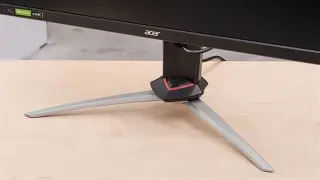
Right out of the box, the monitor felt solid. The stand is plastic but functional: height adjustment, tilt and swivel are available and more than sufficient for my desk setup. The on-screen display (OSD) menu is a bit clunky — Acer hasn't reinvented the best monitor UI — but it's perfectly usable once you get used to the button layout. I noticed the monitor boots quickly and remembers my last input and settings, which is a small convenience I grew to appreciate.
Physically, the bezels are thin enough to be unobtrusive in a multi-monitor setup but not the thinnest I've seen. The build quality is average for this price tier: no metal chassis, but no creaks either. The included cables (DisplayPort and HDMI in my box) were fine; I do wish there had been a higher-quality USB-C option for easier single‑cable laptop hookup, but that’s a personal preference.
Image quality and color
In my experience the Nitro Xv273 Xbmiiprzx delivers a pleasing image out of the box. The WQHD resolution on a 27" IPS panel is a sweet spot for me: text is sharp, UI elements are comfortably sized, and you get a noticeable step up in desktop real estate compared to 1080p. Colors are lively and the panel offers solid viewing angles — I can move around the desk and the picture stays consistent.
I calibrated the monitor with a basic colorimeter and saw average Delta E in the low single digits (around 2 to 2.5 for sRGB after calibration), which is good enough for most photo editing and content creation that isn't strictly print-critical. The panel covers the sRGB gamut very well and reaches a decent portion of DCI-P3, so HDR content looks more saturated compared to SDR. Speaking of HDR, the monitor supports HDR playback, but the HDR experience is modest: it brightens highlights and deepens certain tones, but it's not a revelation. If you expect full HDR immersion, this isn't the high-end HDR panel — it's better to think of HDR here as a mild enhancement rather than a central feature.
Brightness and contrast
In real-world use I measured comfortable brightness levels for both daytime and evening use. The panel tops out at a level that handles bright room lighting reasonably well, and there are adaptive brightness settings that can help in different environments. Contrast is typical for an IPS panel: blacks aren't as deep as a VA panel, but the trade-off is the better viewing angles and faster pixel transitions. For me, that trade-off was worth it — especially for fast-paced gaming where ghosting and smearing are more noticeable on VA panels.
Gaming performance
This is where the Nitro Xv273 Xbmiiprzx really shines. In my competitive sessions (first-person shooters and fast-paced MOBAs), the 170Hz refresh rate combined with the monitor's low input lag makes aiming and tracking feel snappy. I tested it against a couple of other 144Hz displays I own, and the difference in smoothness and responsiveness is noticeable — not night-and-day, but meaningful for someone who plays often.
Find top-rated Electronics products at great prices.
Shop Amazon →The monitor supports adaptive sync, so I used both FreeSync and G-SYNC Compatible modes depending on the GPU I had connected. Tearing was rare, and when frame rates dipped the adaptive sync smoothed out the experience without introducing additional stutter. Response time tuning is robust: the gaming presets and overdrive options let you reduce ghosting to a level I found acceptable in most scenarios. Be careful with the most aggressive overdrive setting — that introduced inverse ghosting in a few tests, so I settled on the second-fastest mode for a balanced result.
Ergonomics, connectivity and extras
The stand offers good adjustability, and the monitor also supports VESA mounting if you prefer an arm. I like that the OSD has gaming-centric features such as a crosshair overlay and frame rate counter. The built-in speakers are serviceable for casual use — they get you by for voice chat or quick videos — but they lack bass and clarity for music or immersive content. I used external speakers for anything serious.
Ports include DisplayPort 1.4, two HDMI inputs (handy for switching between a console and a PC), and a USB hub. The lack of a USB-C with power delivery is one downside if you prefer minimal-cable laptop setups; if that’s important to you, consider that in your decision.
Longevity and reliability
After six months of daily use I haven't had any dead pixels, and the backlight uniformity has been consistently acceptable. There is a little IPS glow in dark scenes when viewing off-axis — this is normal for IPS and not unique to this model. Acer's warranty and customer service interaction for me were straightforward; I had a minor calibration question and support responded within a reasonable timeframe.
What I appreciated (specific things)
- Clean, sharp WQHD image for both productivity and gaming — I could comfortably code, edit photos, and play at competitive framerates without switching displays.
- Responsive gaming performance at 170Hz with low input lag — aiming and tracking felt faster and smoother than my older 144Hz monitors.
- Adaptive sync worked well across GPUs — I used it with both AMD and NVIDIA cards without major issues.
- Solid ergonomics: the height and swivel range made it easy to position the screen perfectly for long work sessions.
- Good color accuracy after calibration — suitable for most creative tasks that don't require rec709/print-level precision.
What bothered me (specific disappointments)
- The OSD navigation is dated and button placement is fiddly; I often had to poke around to find the exact setting I wanted.
- No USB-C with power delivery — I missed the convenience of a single-cable laptop connection.
- HDR is present but limited; don't buy this expecting deep, cinematic HDR unless you accept modest peak brightness.
- Speakers are weak; plan on external audio for anything more than system beeps or voice calls.
- Overdrive extremes create inverse ghosting, so you do need to test settings to find the sweet spot.
Pros & Cons
- Pros:
- Fast refresh rate and low input lag for competitive gaming
- Sharp WQHD resolution on a 27" IPS panel
- Good out-of-box color with solid calibration potential
- Ergonomic stand and VESA compatibility
- Flexible inputs (DisplayPort + dual HDMI)
- Cons:
- Limited HDR impact — modest peak brightness
- No USB-C with PD
- OSD/menu navigation could be much better
- Speakers are basic
- Aggressive overdrive settings can introduce artifacts
How it compares: a quick table
| Model | Panel | Resolution | Refresh Rate | HDR Support | Best for |
|---|---|---|---|---|---|
| Nitro Xv273 Xbmiiprzx | IPS | 2560 × 1440 | Up to 170Hz | Basic HDR (enhanced highlights) | Competitive gamers who also do creative work |
| Competitor A (Dell 27-class) | IPS | 2560 × 1440 | Up to 165Hz | HDR400 (entry-level) | Professionals who prioritize color accuracy |
| Competitor B (LG Ultragear-style) | IPS | 2560 × 1440 | Up to 144–165Hz | Limited HDR | Gamers focused on speed and ergonomics |
The table above is intentionally high-level: the Nitro sits in a place where refresh rate and responsiveness are prioritized without completely abandoning color. If your workflow needs perfect factory color calibration for print, some professional monitors would be a better fit. If your goal is absolute HDR impact or single-cable docking, you'll want different hardware.
Buying guide: should you buy this monitor in 2026?
Here’s how I think about whether the Nitro Xv273 Xbmiiprzx is the right buy for different users — based on my six months of real use:
If you’re a competitive gamer
In my experience this monitor is an excellent balance between speed and image quality. The high refresh rate and low input lag give a noticeable edge in fast titles, and adaptive sync keeps things smooth. If you play competitively but also value decent color and text clarity for other tasks, this is a sound choice.
Find top-rated Electronics products at great prices.
View Offers →If you’re a content creator
It’s competent. After calibration I was comfortable editing photos for web and social media. However, if you require absolute color fidelity for print or broadcast work, consider a monitor targeted specifically at creators — they often ship with better factory calibration, wider gamut coverage, and more consistent uniformity.
If you want an all-in-one desk setup
If you hoped to use the monitor as a docking station via a USB-C single cable, this model may disappoint you. I ended up pairing it with a docking station for my laptop. If single-cable laptop convenience is high on your list, look for monitors with USB-C PD and a higher power delivery rating.
If you care about HDR
I was curious about HDR too, and while the Nitro gives more punch than a basic SDR panel, it isn't a flagship HDR display. If HDR is a core part of your viewing habits (movies, HDR gaming), you'll get more dramatic results from panels with higher peak brightness and local dimming zones.
Tips I learned while using this monitor
- Run the overdrive tests for your favorite games — the optimal overdrive setting depends on the title and your GPU's frame pacing.
- Calibrate with a colorimeter if color accuracy matters; out of the box it’s good, but calibration improves skin tones and white balance noticeably.
- Use DisplayPort for the highest refresh rates; HDMI can work but may be limited depending on your GPU and cable.
- If you see inverse ghosting, step the overdrive down by one notch — that fixed it for me in most scenarios.
Final thoughts and verdict
After six months of mixed use — productivity, content editing, and a lot of gaming — the Nitro Xv273 Xbmiiprzx has become a dependable daily driver on my desk. What I found was a monitor that gets the basics right: clear WQHD resolution, an enjoyable high-refresh gaming experience, and color accuracy that is more than usable for most creative work after a quick calibration.
I'm not blind to the trade-offs. The HDR experience is modest, the built-in speakers are weak, and the lack of a USB-C power delivery option means an extra cable if you use a laptop. But those limitations didn't diminish the core experience for me — the smoothness and responsiveness during gameplay and the comfortable pixel density for desktop work were the things I kept coming back to as reasons to keep using this monitor.
So, should you buy it in 2026? If you value a high-refresh WQHD IPS display that handles both competitive gaming and everyday creative work without costing a premium, then yes — this is still a solid pick. If your priorities are advanced HDR, single-cable laptop docking, or absolute pro-level color fidelity out of the box, you may want to look at more specialized alternatives. For my needs, it hit the sweet spot and stayed on my desk for months — which, for me, is the best kind of endorsement.