Head-to-Head: Tile Slim 2024 vs F1 25 (Detailed Comparison)
Introduction
Bluetooth trackers are an increasingly common solution for everyday misplacement — wallets, keys, luggage, and even backpacks. Two devices that often appear on shoppers’ shortlists are the Tile Slim 2024 and the F1 25. Both target people who want a low-effort way to keep track of valuable items, but they take different approaches to design, features, and ecosystem integration. This article compares the two head-to-head to help potential buyers decide which model better suits their real-world needs.
At a glance: what each product aims to solve
The Tile Slim 2024 continues Tile’s long-standing focus on a wallet-friendly, card-shaped tracker that slides into slim pockets and fits alongside cards. It aims to be unobtrusive and intuitive for people who need passive protection for wallets or notebooks. The F1 25 positions itself as a more general-purpose tracker intended for users who prioritize audible finding and flexibility of placement — a compact design for keyrings, backpacks, or camera bags. Understanding that core intent helps frame the detailed feature comparison that follows.
Detailed review and analysis
Design and form factor
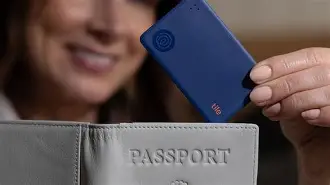
Tile Slim 2024: The Tile Slim line is defined by its card-like profile. The 2024 iteration keeps the ultra-thin silhouette so it can slide into a wallet or passport sleeve without creating a bulge. This makes it ideal for anyone who carries a slim wallet, a passport, or a document holder. The discreet style minimizes attention and blends into everyday carry items.
F1 25: The F1 25 takes a different route: a compact, slightly thicker puck or tag shape designed to be attached to keyrings, bag zippers, or camera straps. Its mounting options are more versatile than a card-shaped tracker because it usually includes a hole or attachment point for physical fasteners. The shape can handle a louder speaker module and a slightly larger battery, which are useful trade-offs for people who need audible alerts.
Findability: sound, range, and app experience
Tile Slim 2024: Tile’s ecosystem has historically placed strong emphasis on the mobile app and the community network. The Tile app provides separation alerts, last-known location, and remote ringing. In practice, the Slim’s speaker is designed for short-range locating — adequate for finding a wallet inside a couch or under a car seat but not intended to be heard across a large room. The app experience often matters most; Tile’s app is familiar to many users and integrates with common voice assistants and operating-system features.
F1 25: The F1 25 typically emphasizes clear audible locating and straightforward app controls. Where the F1 25 shines is when a louder ring and physical attachment points are priorities. The app usually focuses on quick pairing and an immediate find function, with user interfaces geared toward one-handed use for people who want minimal friction when locating keys or bags. Buyers who prioritize an aggressive ring and uncomplicated app workflows will appreciate these choices.
Battery life and maintenance
Battery life is a major decision factor for buyers. Tile’s Slim models have historically been engineered for long life given the small, thin form factor — the trade-off is that some models use non-replaceable batteries that are rated to last for an extended period and then require replacement of the whole unit or recycling through a trade-in program. This approach suits buyers who prefer “set it and forget it” solutions for items that are replaced infrequently, like wallets.
The F1 25 often offers a more serviceable design — replaceable batteries or a user-accessible compartment — which appeals to people who want to manage costs over the long term. If the F1 25 is positioned for frequent attachment to keys or outdoor gear, a replaceable battery can be more convenient and economical. Consideration of how easily a tracker’s battery can be swapped is especially important for users who travel or who need high uptime for daily commutes.
Network and crowd-finding
Tile Slim 2024: One of Tile’s strengths is its established network of users. When an item is out of Bluetooth range, Tile’s crowd-finding feature can report the last known location when another Tile app user passes nearby. This is a real-world advantage in urban environments, transit hubs, and places with many people moving around — commuters, students, and frequent travelers benefit most from this passive, community-powered recovery feature.
F1 25: The crowd-finding capability of the F1 25 depends on its ecosystem. Newer entrants often try to offer a comparable network or partner with existing platforms, but the effective reach is tied directly to how many devices and users are in the field. For buyers who worry about losing items while traveling through crowded cities or airports, ecosystem size and partners should weigh heavily in the decision.
Looking for the best Electronics deals on Amazon?
See Deals →Security, privacy, and ecosystem integration
Both devices typically offer the basic security features buyers expect: encrypted Bluetooth communication and app-level access controls. Tile has focused in recent years on stronger privacy controls, including notifying people about unknown trackers moving with them. For users who are sensitive about stealth tracking or want explicit anti-stalking protections, the maturity of Tile’s software and its integration with mainstream operating systems is an important consideration.
The F1 25 may provide comparable privacy safeguards, but buyers should verify whether it supports background scanning for unknown trackers (as modern operating systems allow) and how the vendor handles data. Integration with smart home platforms and voice assistants is another practical consideration: buyers who want to say “find my wallet” via a voice assistant will value a tracker with established integrations.
Durability and real-world resilience
Tile Slim 2024: The Thin profile limits internal space, so the Slim is usually rated for everyday splashes and incidental exposure rather than heavy-duty water immersion. It is best used in controlled carry environments like wallets and passport covers. The Slim’s edge case is comfort and fit rather than ruggedness.
F1 25: With a slightly more robust body, the F1 25 typically withstands the knocks and abrasion associated with keys and outdoor use. If a buyer routinely clips a tracker to hiking gear, camera rigs, or luggage handles, the F1 25’s stronger build and optional weather resistance may make it the more practical long-term choice.
Pros & Cons
Tile Slim 2024
- Pros: Slim, wallet-friendly form that preserves slim profiles; well-established app and ecosystem; community crowd-finding useful in populated areas; discreet look for low-profile use.
- Cons: Limited attachment options for non-wallet use; speaker volume suited to short-range locating; potential non-replaceable battery depending on model variant.
F1 25
- Pros: Versatile attachment points for keys and bags; louder speaker and more audible locating in medium-sized rooms; often serviceable battery compartment; generally more rugged for daily carry.
- Cons: May not slide into a slim wallet; ecosystem reach and crowd-finding effectiveness depend on vendor adoption; shape can be bulkier in tight pockets.
Feature comparison table
| Feature | Tile Slim 2024 | F1 25 |
|---|---|---|
| Form factor | Ultra-thin card designed for wallets and passport pockets | Compact puck/tag for keyrings and bag attachments |
| Best use cases | Wallets, passports, document holders, slim pockets | Keys, backpacks, luggage, camera bags |
| Speaker loudness | Moderate — optimized for close-range finds | Louder — optimized to be heard on keyrings and in rooms |
| Battery approach | Long-life design; some models non-replaceable | Often replaceable or serviceable for extended use |
| Crowd-finding / network | Large, established network with proven coverage | Depends on vendor ecosystem size and partnerships |
| Water and durability | Designed for everyday carry; splash-resistant | Typically more rugged; better suited for outdoor use |
| App & integrations | Mature app, common voice assistant support | Varies by vendor; focus on quick finding and usability |
| Price positioning | Mid-range consumer tracker with subscription options for advanced features | Mid to budget-friendly, value-focused for everyday attachments |
Buying guide: pick the right tracker for real-world needs
Buyers should align the tracker’s physical design and the surrounding ecosystem with how they actually use their items. Here are the key considerations to guide a practical purchase decision.
1. Decide where the tracker will live
If the primary goal is to protect a slim wallet, passport, or a thin notebook, a card-shaped tracker like the Tile Slim 2024 is the logical choice because it preserves the item’s form factor. If the tracker will be attached to keys, clipped to a bag, or used in rugged environments, a tag-style device such as the F1 25 will likely suit better.
2. Consider battery replacement vs. lifespan
Some buyers prefer a user-replaceable battery to avoid buying a whole replacement device after battery depletion, while others prefer sealed designs that promise long life and lower short-term maintenance. Frequent travelers and daily commuters often prefer replaceable batteries for long-term cost efficiency.
3. Evaluate the ecosystem and crowd-finding network
For items that are likely to be lost outside the home — in transit, in cafés, or at airports — the size and activity of the tracker’s user base is critical. A tracker that relies on a broad network will improve chances of recovery in public spaces. Confirm whether the vendor has an active app community and partnerships that extend reach.
4. App features and user experience
Look for features that matter: separation alerts, last-known location, shared access (family accounts), privacy protections against unwanted tracking, and integrations with voice assistants. Read current app reviews to assess stability — the hardware is only as useful as the software that manages it.
Shop the latest Electronics picks on Amazon.
Browse Now →5. Durability and environmental exposure
Anyone who frequently uses a tracker outdoors should prioritize build quality and weather resistance. A tracker that sits on a keyring will experience more wear than one tucked into a wallet. Check IP ratings or vendor guidance on durability for peace of mind.
6. Audible volume and findability
Test or compare reported speaker volumes if possible. A louder speaker is essential for locating keys in house clutter or inside large rooms, whereas a softer chime may suffice for finding a wallet inside a bag.
7. Privacy and safety considerations
Modern trackers offer anti-stalking features and unknown-tracker alerts. Confirm whether the tracker and its app comply with recent platform-level protections and whether the vendor has clear policies about data handling and user notifications.
Real-world scenarios and recommendations
Scenario 1 — The urban commuter: For someone who commutes and occasionally drops or misplaces a wallet in public transit, the Tile Slim 2024’s discreet card form and established community network make it an appealing choice. The passive recovery advantages and slim fit align with the commuter’s desire for minimal bulk.
Scenario 2 — The active professional: For a person who carries keys, clips trackers to messenger bags, or travels with camera gear, the F1 25’s louder speaker, replaceable battery, and attachment flexibility are practical assets. The ruggedness and audible ring matter more than the ability to slip into a wallet.
Scenario 3 — The frequent traveler: Travelers who risk losing luggage or passports should weigh network reach and airport coverage. The Tile Slim 2024 benefits from a large user network, which can be decisive when an item is left in public spaces with many people moving through.

Conclusion
Tile Slim 2024 and the F1 25 serve overlapping but distinct buyer needs. Tile Slim 2024 is optimized for low-profile, wallet-friendly use and benefits from a mature app and crowd-finding network that performs well in populated areas. The F1 25 favors audible locating, attachment versatility, and replaceability — traits that make it well suited for keys, bags, and outdoor gear. The right choice depends on where and how a tracker will be used: for slim wallets and passive recovery in public settings, Tile Slim 2024 is compelling; for everyday keychain duty and rugged convenience, the F1 25 is often the better practical pick. Buyers should prioritize form factor, battery expectations, ecosystem reach, and app features to find the tracker that best fits their daily habits and peace-of-mind requirements.