Head-to-Head: Akaso 360 vs Panasonic Lumix S1 Ii (Detailed Comparison)
The world of digital imaging has fractured into specialized niches, each demanding specific hardware to capture the perfect moment. On one side of the spectrum, we have the immersive, boundary-pushing world of spherical capture, where convenience and field of view are paramount. On the other, we have the high-fidelity ecosystem of professional full-frame mirrorless cameras, where sensor size, dynamic range, and lens quality define the output. Comparing the Akaso 360 to the Panasonic Lumix S1 II might seem like a study in contrasts, yet for many modern content creators, the choice often comes down to these two distinct philosophies of storytelling: total immersion versus absolute precision.
This comparison explores the technical capabilities, real-world ergonomics, and output quality of these two disparate yet compelling devices. Whether you are a travel vlogger looking to capture every angle of a bustling market or a commercial cinematographer requiring the clinical perfection of a L-mount system, understanding the nuances between these tools is essential to making an informed investment.
Understanding the Contenders
Before diving into the technical specifications, it is vital to establish what these cameras represent in the current market. The Akaso 360 is a dedicated omnidirectional camera designed for action, accessibility, and unique perspectives. It utilizes a dual-lens system to stitch together a complete 360-degree view of its environment, allowing the user to "shoot first and point later." It is a tool of spontaneity, often mounted on helmets, handlebars, or invisible selfie sticks.
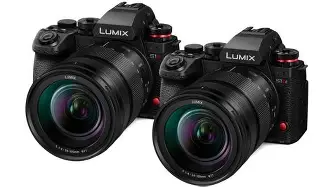
The Panasonic Lumix S1 II, meanwhile, is a professional-grade workhorse. Built around a large 35mm full-frame sensor, it is a hybrid powerhouse designed to satisfy both high-end still photographers and demanding videographers. It is part of the L-Mount Alliance, giving users access to some of the finest glass from Leica, Sigma, and Panasonic. While the Akaso seeks to capture everything, the Lumix S1 II seeks to capture specific subjects with unparalleled clarity and color depth.
Detailed Product Analysis: Akaso 360
The Akaso 360 is built for the "set it and forget it" style of documentation. Its primary strength lies in its ability to record an entire scene simultaneously. In real-world use, this means a mountain biker doesn't have to worry about whether the camera is pointed at the trail or their face; the dual lenses capture both, and the framing is decided during the post-production "re-framing" process. This workflow is a game-changer for solo creators who cannot manage a gimbal and a complex camera rig while performing high-intensity activities.
From a hardware perspective, the Akaso 360 is compact and rugged. It is designed to withstand the vibrations of a motorcycle mount or the occasional splash of water during a coastal hike. Its internal stabilization algorithms are remarkably effective, smoothing out the jerky movements inherent in action sports without the need for external hardware. However, the trade-off for this flexibility is sensor size. Because the light must be distributed across two ultra-wide lenses and small sensors, low-light performance is a known limitation. In bright daylight, the footage is vibrant and sharp enough for social media, but as the sun sets, noise becomes a significant factor.
Pros and Cons: Akaso 360
- Pro: Infinite framing possibilities through post-production re-framing.
- Pro: Extremely portable and easy to mount in tight or unconventional spaces.
- Pro: Excellent electronic image stabilization for high-intensity action.
- Pro: User-friendly app interface for quick social media sharing.
- Con: Small sensors lead to significant noise in low-light environments.
- Con: Image quality at the "stitch line" can occasionally show artifacts.
- Con: Limited manual control compared to professional mirrorless systems.
Detailed Product Analysis: Panasonic Lumix S1 II
In contrast, the Panasonic Lumix S1 II is an instrument of intentionality. Every shot taken with the S1 II is a deliberate choice of focal length, aperture, and focus point. The 24.2-megapixel (or higher, depending on the specific sub-model configuration) full-frame sensor provides a level of "texture" and shallow depth of field that a small-sensor 360 camera simply cannot replicate. The Lumix excels in environments where the lighting is challenging or where the subject needs to be separated from the background with creamy bokeh.
For videographers, the S1 II is particularly revered for its internal recording capabilities. It often supports 10-bit 4:2:2 color sampling, which provides a massive amount of data for color grading. This makes it a favorite for indie filmmakers and documentary shooters who need their footage to match a specific cinematic aesthetic. The ergonomics are also "pro-first," featuring a robust grip, weather-sealing, and a plethora of physical buttons that allow for setting changes without diving into menus. The primary drawback here is size and complexity. Operating an S1 II requires knowledge of the exposure triangle, and carrying it for a full day of hiking is a much more strenuous task than pocketing a 360 camera.
Pros and Cons: Panasonic Lumix S1 II
- Pro: Exceptional full-frame image quality with high dynamic range.
- Pro: Industry-leading internal video codecs and color science.
- Pro: Robust build quality and extensive weather sealing for professional use.
- Pro: Access to a vast ecosystem of high-quality L-mount lenses.
- Con: Significant weight and bulk compared to action-oriented cameras.
- Con: Steep learning curve for beginners or casual users.
- Con: High total cost of ownership when factoring in lenses and media.
Specifications Comparison Table
| Feature | Akaso 360 | Panasonic Lumix S1 II |
|---|---|---|
| Sensor Type | Dual Small-Format CMOS | 35mm Full-Frame CMOS |
| Field of View | 360 Degrees (Spherical) | Variable (Depends on Lens) |
| Primary Use Case | Action, Vlogging, VR Content | Photography, Cinematography, Studio |
| Stabilization | Electronic (Flow-state style) | 5-Axis In-Body Image Stabilization (IBIS) |
| Low Light Performance | Moderate to Poor | Excellent |
| Mounting / Lenses | Fixed Dual Lenses | Interchangeable L-Mount System |
| Weight | Highly Portable (< 250g) | Heavy (> 800g body only) |
Performance in the Field: Real-World Use Cases
To truly understand which camera is right for you, we must look at how they perform in specific scenarios that buyers typically care about.
Looking for the best Cameras & Photography deals on Amazon?
Browse Now →Scenario 1: The Adventure Traveler
Imagine you are trekking through the Swiss Alps. You want to capture the scale of the mountains, the trail beneath your feet, and your own reaction to the view. Using the Akaso 360, you can mount the camera suggesting an "invisible" pole extending from your backpack. The resulting footage looks like a drone is following you, and you can spin the camera view in post-production to show the peaks and then pull back to your face. The light weight means you won't feel it over a ten-mile hike.
With the Panasonic Lumix S1 II, the experience is different. You would likely stop at specific vantage points, swap to a wide-angle lens like a 16-35mm, and carefully compose a shot. The resulting image would have significantly more detail—you'd see the individual blades of grass and the subtle gradations in the blue sky. However, you wouldn't be able to "re-frame" the shot later. If you missed the eagle flying overhead because you were pointed at the valley, that shot is gone forever.
Scenario 2: The Event and Wedding Vlogger
In a wedding setting, the Lumix S1 II is the clear winner for the ceremony and portraits. Its ability to handle the dim lighting of a church or a reception hall is vital. The skin tones produced by Panasonic's color science are natural and pleasing, which is critical for bridal photography. The dual card slots provide the redundancy needed for once-in-a-lifetime events.

However, the Akaso 360 has a "secret weapon" role here. Placing it in the center of the dance floor during the reception allows for a hilarious and immersive capture of the entire party at once. It’s not the primary camera for the "big moments," but it provides supplemental "B-roll" that a traditional camera simply cannot achieve. It captures the atmosphere of the room rather than just a slice of it.
Buying Guide: Which Camera Should You Choose?
Choosing between these two cameras requires a bit of soul-searching regarding your creative goals and your willingness to engage with technical workflows. Here are the primary factors to consider:
1. Post-Production Time vs. In-Camera Effort
The Akaso 360 saves you time in the field but costs you time in the edit suite. You don't have to worry about aiming the camera while shooting, but you do have to spend hours re-framing the spherical video into a standard 16:9 format for YouTube or 9:16 for TikTok. If you enjoy the "directing" phase of editing, the Akaso is a Playground. If you prefer to get the shot right in the moment and do minimal editing, the Lumix S1 II is the logical choice.
2. The Importance of Image Fidelity
If your work is being displayed on large 4K monitors or if you intend to sell your photos to publications, the Lumix S1 II is non-negotiable. The "perceived sharpness" of a 360-degree video, once cropped into a normal view, is often closer to 1080p or even 720p. It cannot compete with the raw resolving power of a full-frame sensor. For professional prints and commercial-grade video, the Lumix is the industry standard.
3. Physical Constraints
Are you mounting the camera to a drone, a car, or your body? The Akaso 360 is built for motion. It is aerodynamic (to an extent) and uses mounting systems that are universal and cheap. The Lumix S1 II requires substantial support—heavy-duty tripods, expensive gimbals, and large camera bags. Consider your physical comfort and the types of environments you frequent. A crowded subway or a cramped cockpit favors the Akaso; a controlled studio or a scenic vista favors the Panasonic.
Discover deals on Cameras & Photography — updated daily.
View Offers →4. Future-Proofing and Ecosystem
When you buy an Akaso 360, you are buying a self-contained unit. When a better model comes out, you replace the whole thing. When you buy a Panasonic Lumix S1 II, you are investing in the L-Mount ecosystem. Even if you upgrade the body in five years, your lenses will still be usable and will likely have held much of their value. The Lumix represents a long-term professional investment, whereas the Akaso is a specialized tool that may have a shorter technological lifespan.
Technical Nuances: Stabilization and Audio
One area where the gap is narrowing is stabilization. Panasonic’s Boost I.S. (Image Stabilization) in the S1 II is among the best in the full-frame world, allowing for steady handheld shots that look almost as if they were shot on a gimbal. However, it still cannot match the "horizon lock" capabilities of the Akaso 360. The Akaso can be turned completely upside down during a recording, and the software will keep the horizon perfectly level. For extreme sports, this "digital wizardry" is invaluable.
Audio is another major differentiator. The Akaso 360 features spatial audio microphones designed to capture sound from all directions. This is great for "ambient" feeling but poor for isolated voice capture. The Lumix S1 II features a professional 3.5mm mic input and a headphone jack, with the option for an XLR adapter. For any content where dialogue is the centerpiece, the Lumix provides the clean, high-gain pre-amps necessary for professional sound.
Conclusion
The Akaso 360 and the Panasonic Lumix S1 II are not truly competitors in the traditional sense; they are complementary tools that serve different masters. The Akaso 360 is for the creator who values the "everything, everywhere, all at once" approach. It is for the explorer who wants to document their journey without a viewfinder coming between them and the experience. It captures the chaos and the scale of the world with a unique perspective that standard cameras cannot touch.
The Panasonic Lumix S1 II is for the artist who values the "decisive moment." It is for the storyteller who uses light, shadow, and focus to guide the viewer's eye. It offers a level of control and a quality of output that remains the hallmark of professional visual media. While the Akaso 360 is fun, spontaneous, and innovative, the Lumix S1 II is reliable, precise, and breathtakingly sharp.
Ultimately, the choice depends on where you want your focus to lie: on the process or the product. Many modern professionals find that the best "kit" actually includes both—a Lumix for the primary storytelling and an Akaso for the immersive perspectives that make a video truly stand out in a crowded digital landscape. By selecting the tool that aligns with your primary creative output, you ensure that your gear works for you, rather than you working for your gear.