Geekom A7 Max Mini Pc First Look: Unboxing and Impressions
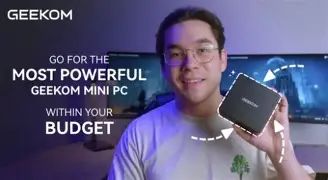
The Geekom A7 Max arrives at a time when mini PCs are no longer niche machines for casual media playback — they are viable options for mainstream productivity, home labs, compact creativity stations, and living-room entertainment. This first-look article examines what buyers can expect from the A7 Max right out of the box and during the first hours of use: design and build quality, ports and connectivity, performance in real-world tasks, cooling and acoustics, upgradeability, and where this model fits in the current mini PC landscape.
Introduction
Mini PCs have evolved from underpowered media boxes to serious small-form-factor (SFF) contenders. The Geekom A7 Max targets users who want a desktop-class experience in a compact chassis: fast general-purpose performance, multiple display support, and modern connectivity. Instead of focusing on raw benchmark scores, this article emphasizes practical impressions — how the A7 Max feels during installation, day-to-day workflows, and typical buyer use cases like remote work, media streaming, light content creation, and casual gaming.
Unboxing and First Impressions
Packaging and Included Accessories
The A7 Max ships in a compact box with minimal packaging that still protects the unit during transit. Inside the package buyers typically find:
- The Geekom A7 Max main unit
- An external power adapter and cable
- A VESA mounting bracket and screws (for attaching the mini PC to the back of a monitor)
- A quick-start guide and warranty leaflet
Packaging is straightforward and free of unnecessary extras — an approach that keeps costs down and aligns with expectations for small desktop machines.
Design and Build Quality
The A7 Max follows the clean, boxy aesthetic common to mini PCs. The housing feels solid in hand with a matte finish that resists fingerprints. The chassis size is compact enough to sit on a monitor stand or be tucked behind a screen using the included VESA mount. A subtle ventilation pattern is present on the sides or top (depending on the revision), and ports are arranged to maximize accessibility without compromising cable management.
Overall, build quality is consistent with what buyers expect from value-oriented but capable mini PCs: no premium metal unibody, but durable plastic or mixed-material construction paired with sensible thermal design choices.
Hardware Overview (What’s Inside)
Geekom positions the A7 Max as a flexible platform: multiple SKUs are often available with different processor and storage/RAM options. Typical configurations emphasize:
- Recent generation mobile-class processors — enough single-threaded and multi-threaded performance for office productivity and light content work
- Upgradable SO-DIMM memory slots (two slots in many models) enabling 8–64 GB RAM depending on buyer choice
- M.2 NVMe SSD support for fast boot and application load times; some models may include a 2.5" bay for SATA drives
- Integrated graphics suitable for 4K media playback and casual gaming
- Multiple external display outputs (commonly HDMI and DisplayPort or USB-C with DisplayPort Alt Mode)
- Wi‑Fi 6 (and in some variants Wi‑Fi 6E) and Bluetooth for modern wireless connectivity
Geekom tends to offer both pre-configured options and bare-bones SKUs, allowing buyers to choose an A7 Max with their preferred balance of CPU, RAM, and storage.
Ports and Connectivity
One of the strengths of modern mini PCs is I/O density, and the A7 Max follows this trend. A typical port layout includes:
- Multiple USB-A ports (USB 3.x and USB 2.0)
- USB-C with power delivery and DisplayPort support on some SKUs
- HDMI 2.x and/or DisplayPort for dual or triple monitor setups (depending on model)
- Gigabit Ethernet (some versions may offer 2.5GbE on higher-end SKUs)
- Audio jack and possibly optical audio output for home theater setups
This mix allows the A7 Max to function as a productivity hub, a compact AV player, or a networked workstation. The presence of USB-C and multiple video outputs is particularly useful for users who want multi-monitor setups without docking stations.
Setup Experience
Initial setup is straightforward: mount the unit (optional), connect power and peripherals, and install the operating system if it isn’t preloaded. The A7 Max typically boots quickly from NVMe storage and recognizes common peripherals without fuss. On the software side, drivers for Wi‑Fi, Bluetooth, and GPU are standard and installable through the manufacturer’s support site or Windows Update.
For Linux users, modern kernels usually recognize most hardware, but it’s always wise to check compatibility notes for Wi‑Fi chipsets and any proprietary graphics features if a Linux-based workflow is planned.
Discover deals on Laptops & Computers — updated daily.
View Offers →Performance Impressions
Rather than presenting synthetic benchmarks, the A7 Max’s real value is apparent in everyday tasks:
Office Productivity and Remote Work
In document editing, web conferencing, spreadsheets, and email, the A7 Max is responsive. Multiple browser tabs and a video call in the background are handled well on configurations with 16 GB of RAM or more. The integrated GPU is more than sufficient for 1080p and 4K video conferencing and screen sharing use cases common in home and small-office environments.
Media Playback and Home Theater
4K video streaming at 60 Hz, HDR passthrough (where supported), and multi-channel audio output perform well. The combination of modern integrated graphics and hardware video decoding ensures smooth playback, making the A7 Max a competent HTPC candidate for living-room setups.
Light Content Creation
Photo editing and light video editing workflows are possible on mid- to high-tier A7 Max configurations. Tasks like color correction, batch photo exports, and short timeline edits in lightweight editors run acceptably. For heavier 4K video editing and complex effects, dedicated desktop GPUs still offer advantages, but the A7 Max covers many creators’ needs in a compact footprint.
Casual Gaming
The A7 Max supports casual and older games at playable frame rates when settings are tuned for integrated graphics. Titles that rely heavily on CPU single-thread performance benefit from the A7 Max’s mobile-class chips; however, AAA game performance at high settings is outside the expected envelope unless paired with a discrete external GPU solution (e.g., eGPU via Thunderbolt, if supported).
Thermals and Noise
Thermal performance is an important area for mini PCs. The A7 Max uses a small but efficient cooling solution. Under light loads (web browsing, streaming, office apps) the unit remains cool and near-silent. Under sustained heavy loads, the fan becomes audible but not intrusive for most workspaces — an acceptable compromise given the compact size.
Buyers who prioritize absolute silence should look for passive-cooled mini PCs or consider external cooling strategies, but for a balance of performance and acoustics the A7 Max is suitable for most home and office environments.
Upgradeability and Maintenance
One of the A7 Max’s practical advantages is its reasonable upgrade path. Many SKUs expose:
- Two SO-DIMM slots for user-upgradable RAM
- At least one M.2 slot (NVMe) for storage expansion
- Sometimes a 2.5" SATA bay for larger-capacity storage
Opening the chassis for upgrades is generally tool-light, and Geekom’s documentation covers supported component sizes and thermal considerations. This makes the A7 Max a better long-term investment than sealed, soldered mini-PCs for users who expect to scale memory or storage over time.
Software and OS Compatibility
The A7 Max typically ships with Windows preinstalled on consumer SKUs, and driver support is commonly available on the manufacturer’s site. Linux compatibility is usually solid for core features, but prospective Linux users should check Wi‑Fi chipset and audio compatibility for their preferred distribution. Virtualization for light workloads is possible on higher-RAM configurations, making the unit useful for development sandboxes and testing environments.
Real-World Use Cases
Understanding what the A7 Max does well helps buyers decide if it matches their needs. Typical use cases include:
Find top-rated Laptops & Computers products at great prices.
Browse Now →- Home office: Dedicated workspace with multiple monitors, video conferencing, and productivity software.
- Media center: Compact living-room PC for streaming, local media playback, and light emulation.
- Small business point-of-sale or kiosk: Reliable performance with VESA mount capability for tidy installs.
- Developer workstation: Lightweight builds, local virtual machines, and remote deployments for development teams.
- Digital signage and control stations: Compact hardware with long-term uptime potential in controlled environments.
Pros & Cons
- Pros
- Compact footprint with VESA mountability for clean setups.
- Good I/O density — multiple video outputs and modern USB ports.
- Upgradable RAM and NVMe storage for future-proofing.
- Capable integrated graphics for 4K media playback and casual gaming.
- Reasonable thermals and fan noise for everyday productivity.
- Cons
- Not a substitute for high-end desktops or discrete GPU systems for intensive 3D work.
- Some SKUs may use mobile-class components with performance trade-offs vs. full-size desktop CPUs.
- Wi‑Fi and Ethernet options vary by configuration — verify networking needs before purchase.
Comparison Table: Geekom A7 Max vs Typical Mini PC Alternatives
| Feature | Geekom A7 Max | Intel NUC (compact models) | MinisForum / Beelink (similar SFF brands) |
|---|---|---|---|
| Processor Options | Mobile-class multi-core CPUs (configurable) | Intel mobile/ULV and sometimes desktop-class CPUs | Varied — AMD & Intel options across models |
| Graphics | Integrated GPU suitable for 4K playback | Intel Iris Xe or discrete options on some models | Integrated; select models offer stronger iGPU performance |
| Upgradeability | SO-DIMM slots + M.2 (+ possible 2.5" bay) | Varies — many allow RAM & NVMe upgrades | Similar upgrade paths; check model specifics |
| Ports | Multiple USB-A, USB-C, HDMI/DP, Ethernet | Well-rounded I/O, often slightly more enterprise-focused | Comparable I/O; some models add 2.5GbE or dual Ethernet |
| Thermals & Noise | Balanced — quiet at low loads, audible under sustained load | Often optimized for low noise in office models | Varies widely by design and cooling |
| Best for | Home office, media playback, light creative work | Business users, compact performance builds | Enthusiasts and users seeking specific performance/port combos |
Buying Guide: Is the A7 Max Right for the Buyer?
When considering the Geekom A7 Max, buyers should weigh the following factors according to their use case:
1. Define the Primary Use
If the main tasks are web browsing, office apps, video conferencing, and media streaming, the A7 Max is a strong contender. For heavy 3D rendering, large-scale video editing, or high-end gaming, a desktop with a discrete GPU remains the better choice.
2. Choose RAM and Storage Wisely
RAM is one of the easiest and most impactful upgrades. For multitasking with multiple browser tabs and productivity apps, 16 GB is a practical baseline. Buyers who plan to run virtual machines or development environments should opt for 32 GB or more. NVMe storage provides faster boot and application performance; pairing a fast NVMe drive with a larger-capacity 2.5" drive (if supported) is a good hybrid approach.
3. Confirm Display and Peripheral Needs
Verify the number and type of display outputs if multi-monitor support is required. Also check whether USB-C supports DisplayPort Alt Mode and/or power delivery — this can simplify connections to modern monitors.
4. Networking Requirements
Confirm whether the SKU supports the desired Ethernet bandwidth (Gigabit vs 2.5GbE) and Wi‑Fi standard (Wi‑Fi 6 vs 6E) for home or office networks. For network-heavy tasks or local file servers, a faster wired connection will matter.
5. Consider Noise and Thermal Environment
Place the mini PC in the intended environment and consider acoustics. Shared living spaces or quiet rooms may benefit from choosing a low-power SKU and ensuring adequate airflow around the chassis.
6. Check OS and Driver Support
Make sure drivers for Wi‑Fi, audio, and graphics are available for the chosen OS. If Linux is required, research compatibility for the specific wireless chipset and any proprietary features that may be Windows-only.
7. Budget and Total Cost of Ownership
Mini PCs often have higher price-per-performance than similarly specced desktop towers due to miniaturization. Factor in future upgrade costs (RAM, storage) and peripherals such as external monitors, keyboards, and docking if needed.
Conclusion
The Geekom A7 Max is a compelling entry in the modern mini PC field: compact, flexible, and tailored for users who need a capable desktop experience without a full tower. It balances performance, connectivity, and upgradeability in a small package, making it well-suited for home offices, media centers, small business deployments, and lightweight creative work. Its practical port selection, VESA mountability, and upgrade paths make it a sensible choice for buyers who want a tidy desk footprint without sacrificing functionality.
As with any mini PC, prospective buyers should match the chosen configuration to their workload expectations — prioritize RAM and NVMe storage for multitasking and responsiveness, and confirm networking and display needs before purchase. For those who value a compact, serviceable desktop that handles everyday computing gracefully, the A7 Max is worth considering as part of a modern SFF setup.